
How is cybersecurity leadership evolving to meet future challenges?
How is cybersecurity leadership evolving to meet future challenges?
Content of research
Inhoud onderzoek
Cybersecurity is no longer just a technical issue, it has become a crucial business enabler. The responsibilities of those managing cybersecurity, whether they are CISO’s, CIO’s, IT directors, or IT managers, are expanding rapidly. Their role now goes beyond protecting IT infrastructure; they manage business risks, guide corporate strategy, and advise management on critical security decisions. By 2025, a Gartner study predicts that 40% of cybersecurity leaders will report directly to the CEO, highlighting the increasing strategic importance of cybersecurity [1].
Today, cybersecurity leaders are responsible for legal matters, compliance, security ROI, team management, partner relations, media communication, change management, and strategic advice. They must effectively communicate with senior management, translating cybersecurity risks into business language and focusing on competitive advantages rather than just technical threats. This shift is crucial, as recent research shows that 69% of employees bypassed cybersecurity guidance in the past year, and 74% would do so if it helped achieve business goals [2].
These developments contribute to the evolution of cybersecurity leadership. However, this shift also comes with challenges. While cybersecurity leaders take on more responsibilities, they must still continuously defend against persistent threats and high-profile incidents that frequently make national headlines, often at the risk of their professional reputations. It’s no surprise that 43% rated professional risk as a “very” or “most important” factor in declining leadership roles in cybersecurity, according to Accenture [3]. Moreover, Gartner predicts that by 2025, nearly half of cybersecurity leaders will change jobs due to multiple work-related stressors and the realisation that their current role differs from what they initially signed up for [2].
With cybersecurity becoming a core business function, organisations must ensure that their security leaders receive the necessary support and resources to be effective. Strategic decisions should not only focus on mitigating threats but also on enabling business success through strong cybersecurity practices.
What do you see as the biggest change in your role? How do you ensure security decisions are embedded in business strategy? What challenges do you face, and, importantly, how did you solve them?
To gain insights into these questions and share knowledge, Fortinet is conducting a benchmark study. Participating in this research will provide you with valuable insights into how various cybersecurity leaders manage these challenges and highlight key success factors.
Topics
Onderwerpen in het onderzoek
- Strategic Evolution of cybersecurity leaders
- Decision Rights and Accountability
- Support from C-Level Executives and Board
- AI and Emerging Technologies
- Insider Threats and Behavioural Management
- Future Board Involvement
Participation benefits
Voordelen bij deelname
Personal appointment
You will receive a personal presentation of the benchmark report by our specialist via videocall or at your location.
Persoonlijke afspraak
U krijgt een persoonlijke presentatie van het benchmarkrapport door onze specialist via videocall of bij u op locatie.
Compare yourself to your peers
The specialist presents the benchmark report with your answers and the answers of your peers.
Vergelijk uzelf met uw omgeving
De specialist overhandigt het benchmarkrapport met uw antwoorden en de antwoorden van uw peers.
Periodic updates
If requested, we will send you periodic updates on the results from our benchmark research.
Periodieke updates
Indien gewenst krijgt u van ons periodieke updates over de resultaten uit ons benchmarkonderzoek toegestuurd.
Personal benchmark report
Persoonlijk benchmarkrapport
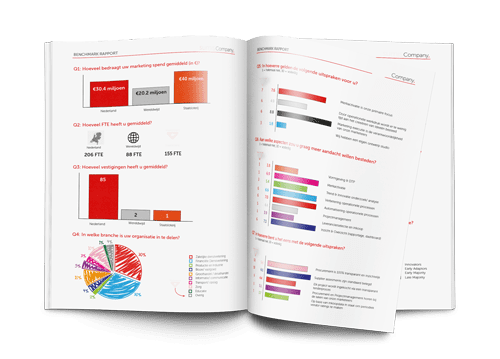
Upon participation in the online survey, you will receive from us the benchmark report that allows you to easily compare yourself with other anonymized participants.
The benchmark report will be presented to you through a personal appointment and discussed with our specialist. Completing this questionnaire will take about 10 minutes.
 Nederlands (Formeel)
  English (UK)
  简体中文
简体中文  Français
  Deutsch
  Español
  Italiano
  日本語
日本語  Português
  Dansk
Dansk  Svenska
  Suomi
Suomi  Norsk bokmål